
2026-11-01
Do you have a problem in finding the right PTO shaft cause it has so many series? Then you come to the right place. This guide will help you understand what is PTO series is and what they stand for, ensuring you can find the perfect fit for your work.
A PTO shaft series is a standardized measurement system that defines how much power a shaft can safely handle. The “series” number refers to the size of the universal joints (U‑joints) — those cross‑shaped parts that allow the shaft to flex and transfer power at an angle.
In short:
A larger series number = a larger and stronger U‑joint, capable of handling more horsepower and torque.
For example, a Series 6 PTO shaft uses a bigger U‑joint than a Series 4, meaning it’s built for more powerful equipment.
Using the wrong series can lead to shaft failure, possible equipment damage, and serious safety risks.
Here’s an easy‑reference PTO Shaft Series Chart based on common North American standards (Weasler). Use it to identify or compare shaft types.
| PTO Series | Typical HP Rating (at 540 RPM) | U‑Joint Measurement (Cap Diameter × Cross Width) | Common Applications |
| 1 | 16 HP | 22mm × 54mm (0.87″ × 2.13″) | Small tillers, log splitters, generators |
| 2 | 20 HP | 23.8mm × 61.3mm (0.94″ × 2.41″) | Small rotary cutters, post‑hole diggers |
| 3 | 30 HP | 27mm × 70mm (1.06″ × 2.76″) | Mid‑size tillers, small round balers |
| 4 | 35 HP | 27mm × 74.6mm (1.06″ × 2.94″) | Most rotary cutters, hay rakes, and standard balers |
| 5 | 47 HP | 30.2mm × 80mm (1.19″ × 3.15″) | Mid‑size square balers, feed mixers |
| 6 | 62 HP | 30.2mm × 92mm (1.19″ × 3.62″) | Round balers, wood chippers, and large rotary cutters |
| 7 | 77 HP | 35mm × 94mm (1.38″ × 3.70″) | Large feed mixers, forage harvesters |
| 8 | 95 HP | 35mm × 106.5mm (1.38″ × 4.19″) | Large forage harvesters, large square balers |
Now that you understand the meaning of PTO series numbers, follow these four steps to find exactly what you need.
This is the most important step. If you’re unsure, “how do you know what series PTO shaft you have?”, use one of these proven methods:
Your equipment’s manual is the best and most accurate source — it clearly lists the required PTO series and horsepower rating.
If you have the old shaft, measure the U‑joint to identify its series — you’ll need a caliper for accuracy.
Compare your two measurements to the PTO Shaft Series Chart above to confirm your series.
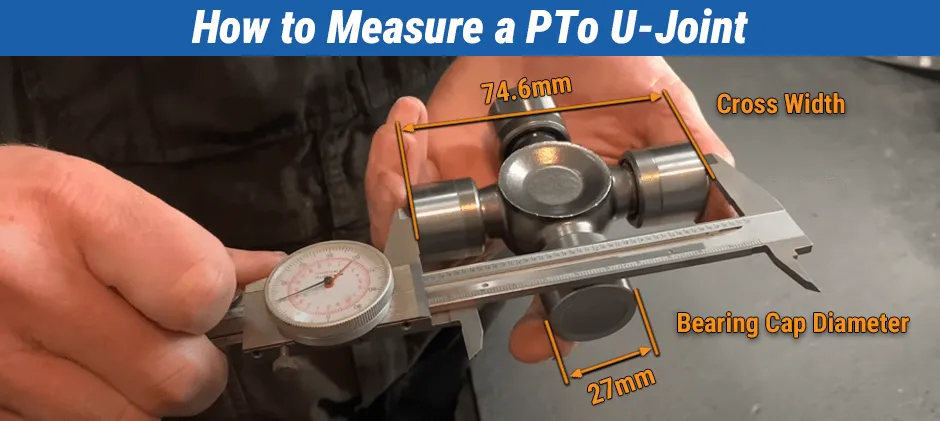
If you don’t have a manual or an old shaft, use your tractor’s PTO horsepower as a reference.
Always select a PTO shaft rated equal to or greater than your tractor’s PTO power.
Never undersize — when in doubt, size up for safety.
PTO shafts are sold by their closed length (fully retracted). You’ll typically need to adjust or cut them to achieve the correct working size.
With the tractor and implement connected in a straight line, measure from the outside of the tractor’s PTO output groove to the implement’s input shaft groove.
With the implement raised and lowered, measure at both extremes to ensure the shaft won’t be too long or too short.
When trimming a new shaft, maintain:
You’ll need to match the PTO connections at both ends — one for your tractor, one for your implement.
Implements may have a similar splined connection or a built‑in safety device, such as:
A complete PTO shaft assembly includes more than metal tubing. It must also have:
Remember: a spinning shield is nearly as dangerous as an exposed shaft.
Before buying, review this quick list:
Understanding what PTO is on a tractor and how to properly connect it is essential for safe, efficient operation.
By correctly identifying your PTO series, length, and connection types, you ensure:
Now that you know exactly what to look for, you can confidently choose high‑quality PTO shafts and PTO shaft parts at MechLink to keep your tractor and implements performing their best — year after year.
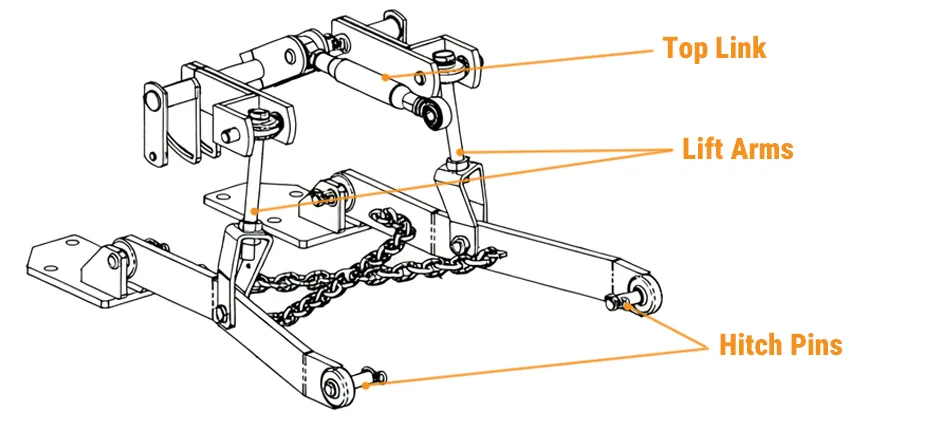
Cat 1 vs cat 2 vs cat 3 tractor: what’s the real difference?
2026-11-01

Nh workmaster 25s complete guide | specs, features & parts
2026-10-31
How to choose the right excavator sizes for your project?
2026-10-31
What is the biggest kubota skid steer? - mechlink blog
2026-10-30