
2026-11-02
What is a tail light? Off-road equipment tail lights can light up the rear of the machine, making it easier for other operators, ground personnel, and site vehicles to see you, especially if the light is not good. This improves worksite safety and reduces accidents. Like other parts, though, tail lights come in all types and unique features.
A tail light is a red light mounted at the rear of the unit, which lights up when the machine’s main light is on. It can communicate the presence and width of the machine to anyone behind. On the site, this is particularly important. Especially when several machines are working together, or when it is still dark, almost dark, raining, or foggy, the tail light is a signal to remind others “that I am here”. If the tail light integrates the brake and turn signal functions, it lets others know what the operator is doing, such as braking or turning, so the machine behind can react in time and avoid a collision.
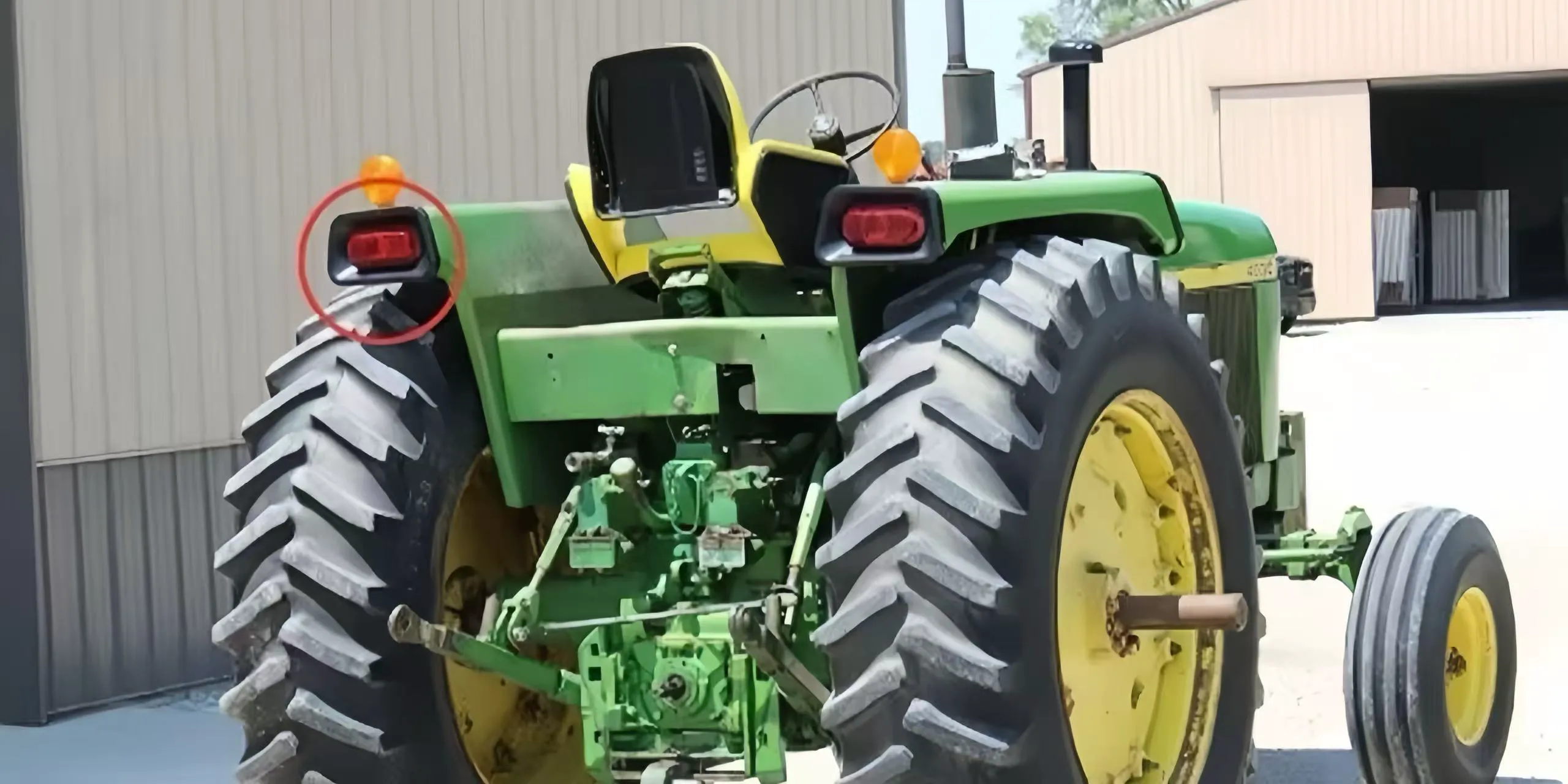
For many years, the technology of tail lights has developed rapidly. Before, the tail lights were simple bulbs. Today, the tail lights are more efficient and durable, as well as having intricate styling. Know the different types of tail lights to make a more appropriate choice when you need to replace or upgrade.
For many years, incandescent lamps were an old standard feature on car tail lights. Its principle is actually quite simple— the current passes through the tungsten wire inside, making it burn brightly. Cheap and uncomplicated in construction, but not very suitable for heavy equipment. The big problem is, it’s particularly shock-prone. On the worksite, the machines shake constantly, and the filament is easy to break. So their use life span is generally not long. Moreover, incandescent lamps are quite energy-intensive, emit more heat than light, and are inefficient. Most modern vehicles don’t use it anymore. After all, there are more durable and power-saving options.
Now, LED tail lights are arguably the best option in off-road equipment. It emits light by semiconductor conduction, which is efficient and strong, especially suitable for this environment on the construction site. Several of its advantages are clear:
Unlike passenger cars, which are regulated by traffic regulations (such as the federal motor vehicle safety standard FMVSS 108), the lighting of off-road equipment is mainly regulated by OSHA (U.S. Occupational Safety and Health Administration), with a focus on preventing accidents on construction sites. To put it simply, it is to make the lights all light up, right and safe. The main requirements are as follows:
Check all lights, including headlights, taill ights, brake lights, and warning lights, before each start of work, and make sure they are on properly before turning them on.
You can replace the tail light bulbs on many machines yourself, and even swap out the entire tail light assembly as a DIY project. Prepare a few common tools, and you can do it by yourself. No need to go to the repair shop, save time and money. Though the exact steps vary from machine to machine, the general steps are simple for anyone with basic mechanical skills. Be sure to consult the machine’s service manual first.
The tail lights are not as simple as looking good. They are related to driving safety. No matter how technology improves, tail lights still make your equipment more visible and keep it safer on the worksite. If the lights are on on one side, dark on the other, or not at all, you need to replace them in time. Common problems like a burning bulb, a cracked lampshade, a darkening of color, or a problem with the circuit. Check more often. MechLink provides LED work lights and parts suitable for a variety of models and brands to help you easily repair and maintain them.
Industrial-grade LED tail lights can handle tough conditions like construction sites. They typically last 20,000 to 50,000 hours and often outlive the machine itself. Their actual lifespan mainly depends on the lamp’s build quality and how well it resists shock, water, and dust.
Better not. A broken tail light is not only dangerous, but it can also violate OSHA’s safety regulations and internal company safety requirements. Without the safety lighting of the machine, others can’t see clearly what you are doing and are prone to accidents. If you find a broken light, repair it before using the equipment.
Most operators can replace the tail lights themselves—especially the bolted ones—as long as they have some basic tools and mechanical skills. However, if the job involves complex wiring or requires reprogramming, a qualified technician should handle it to ensure safety.
How much does ball joints replacement cost in 2026?
2026-11-02
Cat 1 vs cat 2 vs cat 3 tractor: what’s the real difference?
2026-11-01
What series pto shaft do i need? a complete guide
2026-11-01
Nh workmaster 25s complete guide | specs, features & parts
2026-10-31