
2026-11-26
Both a forklift and a telehandler lift loads to height, and from a distance they can look like cousins. The choice between them is rarely about which is better. It is about where the machine will work, how high the load has to go, and what the ground underneath is like.
This comparison sets out what each machine is designed to do, where their strengths stop, the attachments that extend them, and the training the law expects before anyone takes the seat.
A forklift is built for lifting and shifting heavy loads over short distances. A pair of forks travels up and down a vertical mast, so pallets and boxes can be raised and lowered, but the load cannot be pushed forward. That layout suits warehouses, storage facilities and factories, and it is where most forklifts spend their working lives.
Compact, light, economical to maintain, simple to operate and easy to steer in crowded aisles.
Limited versatility, modest load ceiling, no capability on uneven ground, dependence on a controlled environment, and no way to reach over an obstacle.
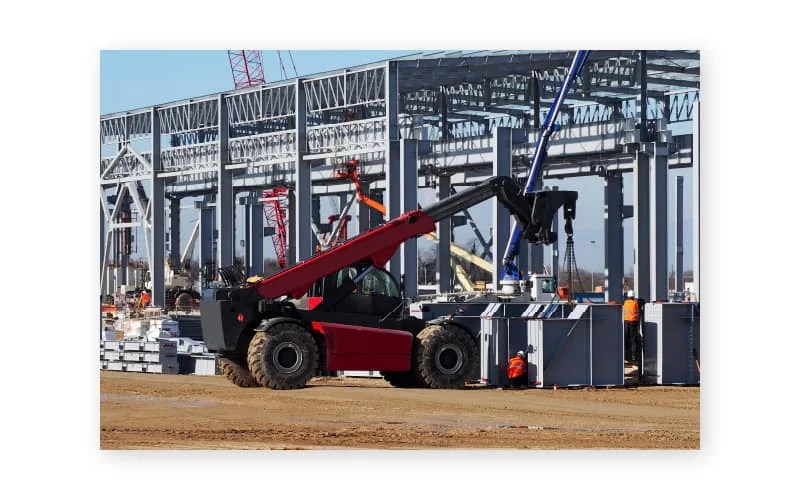
A telehandler — telescopic handler in full — is heavy equipment built to move large loads over real distances. Its boom extends forward and upward, which lifts the load higher than a mast can and lets it pass over whatever stands in the way. Construction sites, farms and any job where material must cross difficult ground are its natural territory.
High load capacity, wide attachment range, long travel distances, confident on rough terrain and able to reach across obstacles.
Larger footprint, awkward indoors, more demanding maintenance, more noise and emissions, and greater weight on bigger tyres.
Shared traits are easy to list: both carry material, both can wear forks, both raise and lower loads. The differences are structural, and they decide the application.
A forklift is short, heavy-set and carries its lifting mechanism at the front, where it can only travel vertically. A telehandler puts a telescopic boom on a low, heavy chassis, and that boom extends as well as rises.
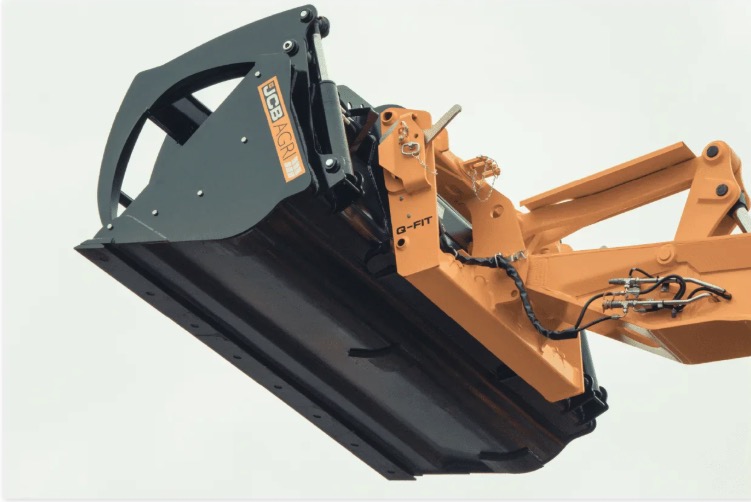
The consequence is range. Because the boom reaches outward, a telehandler can serve a wider set of tasks, and it accepts a much broader catalogue of tooling — attachments such as ice blades, augers and work platforms that a forklift mast could never use.
Telehandlers are generally bigger, heavier and more stable, on larger tyres, and they work outdoors. That bulk buys higher capacity, greater lift height, longer haul distances and the ability to keep moving over broken surfaces.
Three questions usually settle it: what is being lifted, how high, and what surface the machine will stand on.
Whichever machine you run, attachments extend what it can do. These are the common ones for each platform.
Under OSHA guidelines, a forklift operator must be trained by their employer in safe operation before using the machine at work. The training has to be formal, delivered in the workplace, and it has to cover OSHA's requirements for safe forklift use. The point is to reduce accidents and collisions, not simply to issue a card.
A certification programme normally covers:
Both federal and state law place the obligation on the employer: no one should operate a forklift in the workplace without proper training and certification.
Work type, working environment and load weight decide which lift belongs on your job. When the requirement is short-term, MechLink's rental process is built to shorten the gap between deciding what you need and having it delivered.
Telescopic or Articulating? How to Match a Boom Lift to the Task
2026-11-26
Machine tracks: matching material and tread to the work you do
2026-11-26
Engine belts: four types, the symptoms of failure, and what a snapped belt really costs
2026-11-25
Telehandler attachments explained: six tools that change what the machine can do
2026-11-25